Insurance and Safety Standards for Spot Cleaner Operations
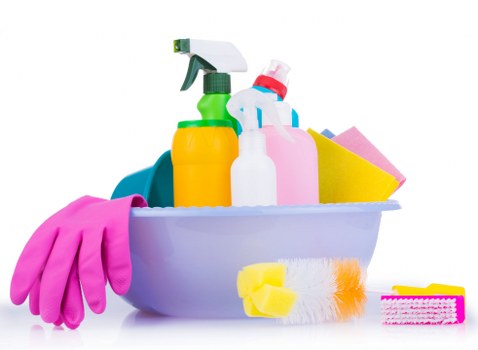 Overview: At Spot Cleaner and our spot-cleaning teams, safety and insurance are the foundation of every job we undertake. We maintain clear policies that balance client protection with workforce wellbeing so that every residential or commercial spot-cleaning assignment is completed responsibly. This page explains our public liability cover, staff training, personal protective equipment, and the risk assessment process that informs every task. Our goal is to deliver reliable spot cleaner services while minimizing hazards and ensuring claims-ready documentation.
Our approach to public liability insurance for the spot cleaner operation is pragmatic and client-focused. We carry comprehensive public liability insurance that protects third parties from accidental injury or property damage arising from our work. This insurance is structured to cover the scope of typical spot-cleaning activities, from small stain removal in homes to targeted treatments in commercial premises. We prioritize clarity: policy limits, insured perils, and exclusions are reviewed regularly to align with industry standards and evolving operational risks.
 The public liability policy for our Spot-Cleaner teams includes coverage for bodily injury, property damage, and legal defense costs in the event of a covered claim. In instances where specialist chemicals or equipment are required, we ensure those operations are specifically considered by our insurer. Our administrative procedures include a documented claims process so any incident is recorded, reported, and resolved efficiently. We keep copies of certificates of insurance and maintain them as part of our quality assurance for every spot-cleaning engagement.
Staff Training and Competence for Spot Cleaning Staff
Recruitment and training underpin safe performance by every member of the spot cleaner workforce. New hires in our spot-cleaning service complete an induction that covers company safety policies, correct handling of cleaning agents, equipment operation, and emergency procedures. Training blends classroom instruction with on-the-job mentoring to ensure that theoretical knowledge translates into safe practice. Competency checks are conducted at the end of induction and prior to independent assignment.
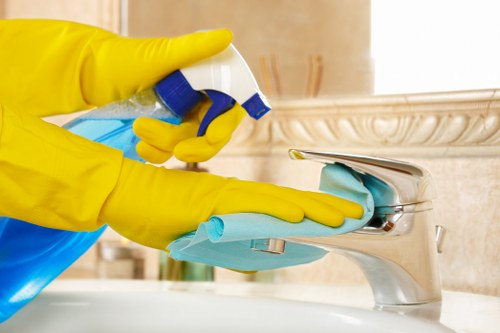 Ongoing professional development is essential for maintaining high standards. We run periodic refresher courses, scenario-based drills, and updates on new products or techniques relevant to spot-cleaner tasks. Training modules include:
- Safe chemical handling and dilution procedures
- Correct use of extraction and spot-cleaning equipment
- Manual handling and ergonomic best practices
- Customer site-specific safety briefings
Supervision and assessment are continuous: team leaders perform spot checks, observe practical tasks, and complete competency forms that become part of our compliance record. In situations that require specialist certification???such as working at height to clean elevated stains or using industrial-strength solvents???only appropriately qualified staff are assigned. This layered training model reduces incidents and supports consistent delivery of our spot cleaning service.
PPE, Equipment Care, and Risk Assessment Process
Personal protective equipment (PPE) is mandatory for many spot-cleaner activities and is supplied by the company. Our PPE policy is driven by risk assessment outcomes and includes the following standard items:
- Disposable nitrile gloves for chemical protection
- Protective eye wear to prevent splash-related injuries
- Respiratory protection where aerosols or strong odors are present
- Non-slip footwear for wet environments
- High-visibility vests for work in shared or public spaces
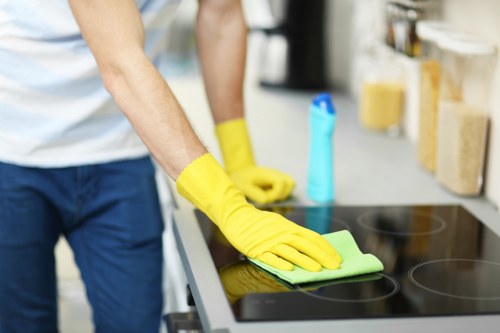 The risk assessment process is systematic and documented for every assignment. Before any spot-cleaning task begins, a supervisor or trained technician completes a site-specific assessment that identifies hazards, evaluates likelihood and consequence, and prescribes control measures. Typical steps in our risk assessment include:
- Identify the task and environment (surface type, access, public interaction)
- List potential hazards (chemical exposure, slips, electrical risks)
- Determine who might be harmed and how
- Decide on and implement control measures (PPE, isolation, signage)
- Record the assessment and review controls with the client if appropriate
- Monitor effectiveness and update the assessment when conditions change
 Safety culture is a continuous commitment for the Spot-Cleaner team. We encourage reporting of near-misses and incidents without blame so lessons can be learned and procedures improved. Prevention, preparedness, and professional practice drive our policies: insurance protects affected parties, training equips our people, PPE guards against exposure, and risk assessments ensure tasks are planned and executed safely. By integrating insurance readiness with practical safety measures, our spot-cleaning service maintains high standards of protection for clients, employees, and the public.